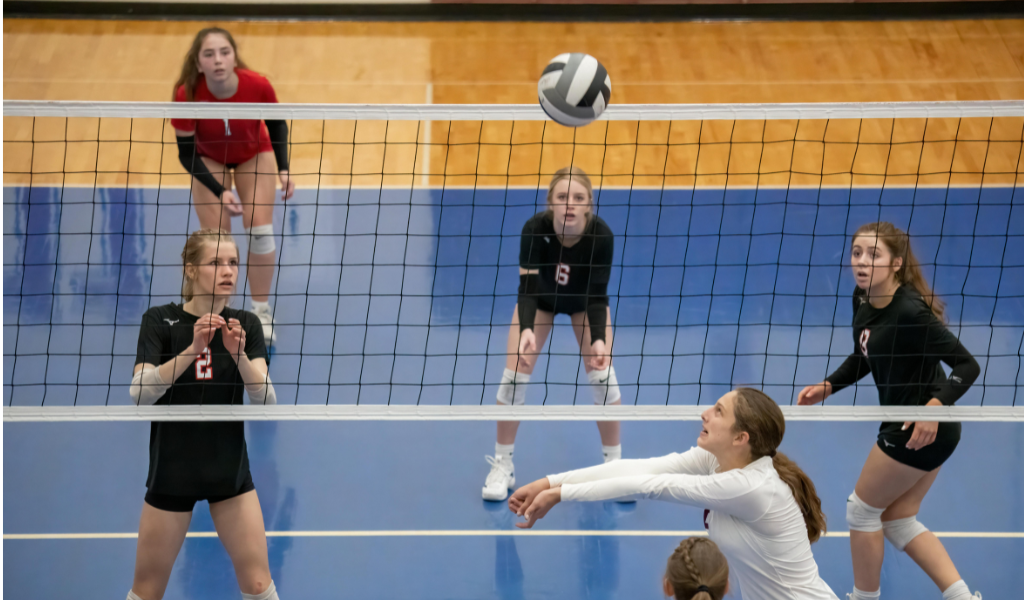
If you’ve ever coached youth volleyball, you already know that passing can make or break a game. It is the foundation every other skill builds on. Without good passing, even the best hitters and setters won’t get a chance to shine.
However, teaching passing isn’t always easy. You’ve probably seen players struggle with poor control, flinch away from the ball, or make inconsistent passes that throw off the entire play.
That’s where this blog comes in. In this blog, you’ll find simple, practical volleyball passing drills you can use right away. These drills are designed to build confidence, improve accuracy, and make your practices more productive.
Beginner Volleyball Passing Drills
1. Toss and Catch Passing
This is one of the easiest drills to get young players comfortable with passing. It builds early confidence and helps them focus on getting their platform and hand position right without any pressure.
Objective: Teach correct forearm technique and build ball control.
Setup: Players work in pairs, standing 10 to 15 feet apart. Each player needs a ball.
How to Run the Drill: Player A tosses the ball up, passes it to Player B using their forearms. Player B will catch the ball, return it to Player A. Players will switch roles after 10 tries. As players get more comfortable, let them pass without catching.
Coaching Cues: Keep knees bent, form a flat platform, and keep eyes on the ball. Make sure the shoulders are slightly forward.
2. Partner Passing
This drill focuses on steady, short passes. It helps young players build control and talk to each other while they pass. It’s great as a volleyball warm-up drill because it’s simple and keeps players moving.
Objective: Improve short passing accuracy and teamwork.
Setup: Pairs stand 10 feet apart. *This drill can be done with or without a net.
How to Run the Drill: Players take turns executing forearm passes to each other, aimed at chest height. After 10 passes, players can add lateral movement while passing to each other.
Coaching Cues: Say "mine" before each pass. Lock the thumbs together and stay in a low, balanced position.
3. Target Passing
This one introduces the idea of aiming passes at specific zones, just like in a real game. It helps beginners learn how to direct their passes toward the setter.
Objective: Develop accuracy and focus on setter-target areas.
Setup: A single passer faces a target like a hoop, cone, or coach standing near the net.
How to Run the Drill: Coach tosses or lightly serves the ball. The passer bumps it toward the target. Switch players every 15 reps. For healthy competition, you can track how many balls land close to the target.
Coaching Cues: Angle your platform toward the target. Move your feet before passing. Finish with hands high.
4. Circle Passing
This drill makes passing fun and social. It works well for warm-ups and helps players stay active with repeated passing.
Objective: Build rhythm and steady control with group passing.
Setup: 5 to 8 players form a circle. One player stands in the middle as the target.
How to Run the Drill: The player in the center tosses the ball to any player in the circle, who passes it back. Then, the center player will make a pass to the next teammate. Count how many successful passes happen in a row.
Coaching Cues: Keep the platform steady. No big arm swings. Stay square and shuffle instead of reaching.
5. Pass and Move
This is a fast-paced drill where players pass and reset quickly. It builds footwork and teaches them to always move after making contact.
Objective: Combine good passing with quick footwork.
Setup: One line of players. A tosser and a target (usually a coach or setter) stand near the net.
How to Run the Drill: The tosser feeds the ball. The passer passes to the target and then quickly moves back to the line. Each player goes 10 times before switching.
Coaching Cues: Move your feet first, then pass. Reset fast and stay low.
Advanced Volleyball Passing Drills
6. 5-3-5-3-5 Passing
This drill builds stamina and focus. It makes players aim for perfect passes in a structured sequence and teaches them how to handle serve pressure.
Objective: Strive for consistent passing, even under pressure.
Setup: 3 passers on the court, 1 target at the net, and servers lined up with balls.
How to Run the Drill: The server will feed the ball. Passers must complete 5 consecutive passes (in any order), then 3 in a row, then repeat the sequence 5 --> 3 --> 5. If they mess up, they start over.
Coaching Cues: Call out seams. Hold your platform steady. Reset quickly after each pass.
7. 21 Down Serve Receive
This is a game-style drill. It uses a points system to make players focus on high-quality passes. Every pass counts, and the pressure makes it feel like a match.
Objective: Improve focus and reduce passing errors in real-time play.
Setup: Two teams, 3 passers on each side. Other players will serve from the baseline.
How to Run the Drill: Each team starts at 21 points. A perfect pass doesn’t subtract points, but lower-quality passes subtract 1-3 points. The first team to reach zero losses.
Coaching Cues: Watch the server's toss. Talk through who will take the ball. Transition smoothly after each pass.
8. X Passing
This drill uses an X pattern across the court to sharpen diagonal passing and rotation. It’s all about reading the court and moving quickly.
Objective: Boost diagonal passing and player awareness.
Setup: 4 players stand at front-right, front-left, back-right, and back-left.
How to Run the Drill: Pass across the X pattern. After each pass, players rotate to the next spot. Run 10 full rotations. You can also add down balls to increase difficulty.
Coaching Cues: Say your line clearly. Step across the court instead of reaching. Focus on where you are sending the ball.
9. Butterfly Passing
This high-speed drill has players pass and then run to the opposite side, keeping everyone active. It helps with transitions and keeps energy high.
Objective: Improve endurance and passing during quick changes.
Setup: Two even lines on either side of the net, 20 feet apart.
How to Run the Drill: Players at the front of each line will execute a pass and then move to the back of the opposite line. The next player in each line steps up and continues passing. Run this drill non-stop for 2 minutes.
Coaching Cues: Pass and then move fast. Shuffle low and mirror the other player’s body movement.
10. Pass and Touch
This one adds a toe-touch after each pass to teach players how to stay balanced and move quickly. It works well for improving recovery after awkward plays.
Objective: Build quickness and balance after each pass.
Setup: One line of passers, one tosser, and one cone placed behind the passer.
How to Run the Drill: Players will pass the ball back to the tosser, touch the cone behind them with their hand, then get ready for the next ball. Do 12 reps per player, then switch.
Coaching Cues: Touch low with control. Get back into position quickly. Keep your core engaged throughout.
Sample Volleyball Passing Practice Plan (45–60 Minutes)
Here’s a simple plan you can try when focusing on passing during volleyball practice:
1. Warm-Up (10–15 Minutes)
Start with basic movement drills and passing technique. Get your players moving, focusing on proper hand positioning, footwork, and platform angles. Use this time to build early ball control.
2. Drill Progression (25–35 Minutes)
Move through drills that go from easy to more challenging. Begin with controlled partner passing, then add movement, targets, or game-like passing under pressure. Each drill should build on the last.
3. Competitive Passing Game (10–15 Minutes)
End with a fun challenge that gets everyone involved. Try games like “Perfect Pass Challenge" or “Pass-to-Win” where players score points for accurate passes. Keep the energy high while reinforcing good habits.
Closing Thoughts
Strong passing does not happen overnight, but with the right drills and steady practice, young players improve faster than you might expect. By keeping things simple, building confidence, and adding pressure slowly, you help players enjoy learning the skill instead of fearing mistakes.
About the Author:
Sarah Baker is a dedicated sports and fitness content specialist with a rich background in athletics. As a former high school volleyball player and track athlete, she understands the transformative power of sports in shaping character and fostering discipline. Sarah is passionate about inspiring youth worldwide to embrace sports, hone their skills, and achieve excellence both on and off the court. Currently, Sarah contributes her expertise to the content team at Valley Athletics, a premier sports facility in Fresno, California, dedicated to developing young athletes in volleyball and basketball.
Danielle Stringer
Danielle is a dynamic content marketer with a unique blend of creativity and analytical expertise. She is driven by her passion for helping companies scale through lead generation, always finding distinctive ways to connect with her audience. Drawing from her extensive background in B2B SaaS, she is thrilled to apply her skills and knowledge in her current role at SkillShark Software Inc.